
How cannabis works with your body: the endocannabinoid system explained
4 August 2026 · 6 min read
Most people meet cannabis as a plant. It is easier to understand as a conversation — one your body is already having with itself, every minute of the day.
Your own cannabinoid network
The endocannabinoid system, or ECS, is a network of receptors running through the brain, nerves, bones, lungs, muscles, skin and digestive tract. Think of them as connectors that keep different systems talking to one another: sleep and waking, appetite and digestion, pain signalling, mood, immune response and inflammation.
When that communication is disturbed — by stress, injury, illness, poor sleep or simply age — the body falls out of balance. Symptoms are how we notice it. The cause, very often, is a conversation that has broken down.
Where the plant comes in
The cannabis plant produces hundreds of cannabinoids of its own, and researchers keep finding more. The two best known are CBD (cannabidiol) and THC (tetrahydrocannabinol). Both interact with the same receptor network your body uses, which is why cannabis is studied for such a wide spread of conditions rather than one narrow complaint.
CBD has no psychoactive effect — it will not make you feel high — and is commonly used for anxiety, low mood, inflammation, migraines, nausea, seizures, bone health and sleep-adjacent conditions. THC is the psychoactive one, and is more often reached for with pain, arthritis, fibromyalgia, glaucoma, tremors, appetite and insomnia. Many people do best on a combination, with CBD in the morning and THC at night.
Why we blend with MCT oil
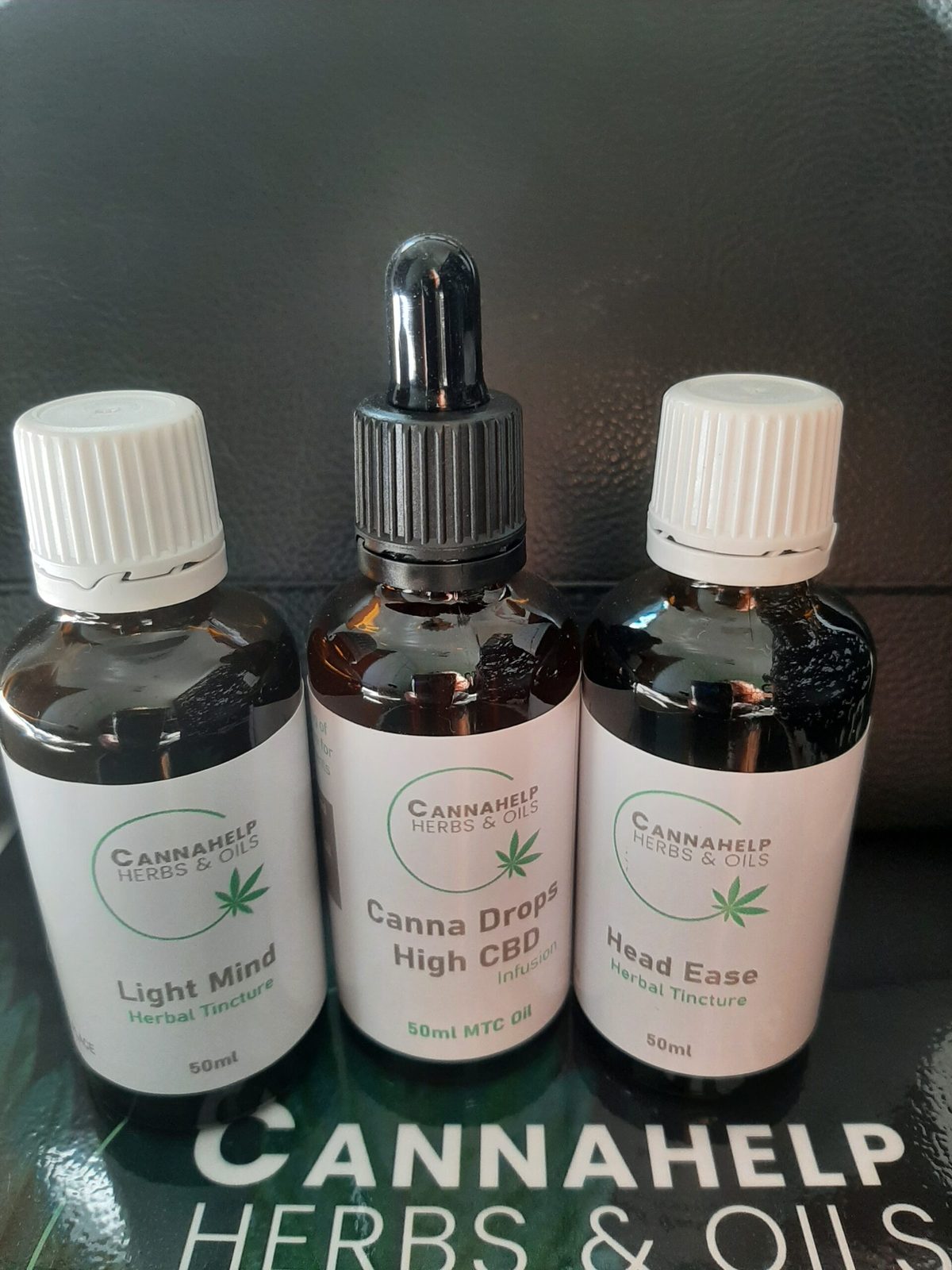
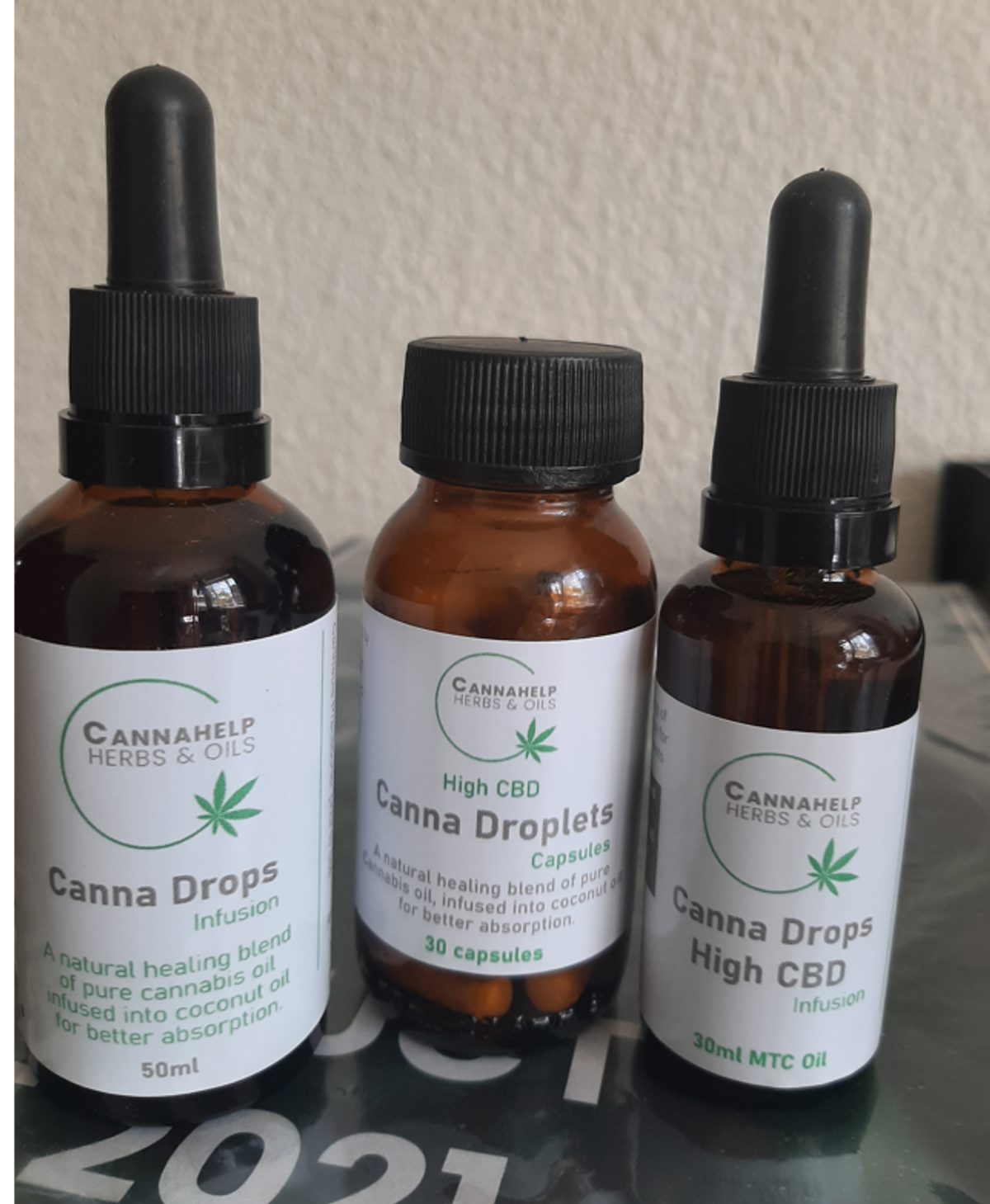
Every CannaHelp tincture is blended into MCT (medium-chain triglyceride) oil. The shorter fat chains are absorbed more easily than the long-chain fats in most foods, so a drop held under the tongue reaches the bloodstream faster and more predictably. It also gives a clean, mild taste, which matters when a remedy has to be taken daily.
Start low, go slow
The honest advice for anyone new to cannabis is the same advice we give in person: start with the smallest suggested dose, keep it consistent for a week, and only then increase. Bodies differ enormously in sensitivity — dogs, for instance, have roughly twice as many ECS receptors as people do, which is why pet doses are so much smaller than owners expect.
If you are pregnant, nursing, on chronic medication or treating a diagnosed condition, speak to your healthcare practitioner before starting, and message Daleen or Lee so we can guide the dose with you.
Please note: this article is general information, not medical advice. CannaHelp products are complementary medicines and have not been evaluated by SAHPRA. Speak to your healthcare practitioner before starting any remedy, especially during pregnancy, while nursing, or alongside chronic medication.